Heating bills in Oklahoma don’t climb steadily all winter. They spike during a few hard weeks when an Arctic front parks over the state and the furnace or heat pump barely shuts off. Most of the savings come from small habits and cheap fixes, not a new system.
The U.S. Department of Energy says turning your thermostat back 7 to 10 degrees for 8 hours a day can save as much as 10% a year on heating and cooling. Start there, then work down this list. A printable version with checkboxes is free to download.
Download the free heating bill guide (PDF)
Thermostat habits
1. Set it to 68 while you’re awake
Each degree above 68 adds to the bill. A sweater and socks cover the difference for most families.
2. Use setbacks when nobody is home
With a gas furnace, drop the temperature 7 to 10 degrees during work hours and schedule it to warm back up 30 minutes before you get home.
3. Keep heat pump setbacks small
Big setbacks on a heat pump can kick on backup electric heat strips during recovery, and those cost far more to run. Keep setbacks to 2 to 4 degrees.
4. Set the fan to AUTO
The ON setting runs the blower all day, uses more electricity and pushes cooler air between heating cycles.
5. Use a smart or programmable thermostat
Setbacks only save money if they happen every day. A smart thermostat runs the schedule for you. Pick one that matches your system type. Our guide to the best thermostat settings for an Oklahoma winter has sample schedules.
Around the house
6. Change the filter every 1 to 3 months
A dirty filter makes the blower work harder and the system run longer for the same heat.
7. Let the sun in, then close the blinds
Open south-facing curtains on sunny winter days and close every curtain at dusk to hold the heat in.
8. Weatherstrip doors and windows
Drafts make a room feel colder, and that leads to turning the thermostat up. Door sweeps and weatherstripping install in minutes.
9. Seal attic and outlet gaps
Insulate the attic hatch or pull-down stairs, and add foam gaskets behind outlet covers on exterior walls.
10. Close the fireplace damper
An open damper on a cold night works like an open window and pulls heated air up the chimney.
11. Keep vents open and unblocked
Closing vents in empty rooms doesn’t save money on most central systems. It raises duct pressure and can increase leaks.
12. Run ceiling fans clockwise on low
In winter, a slow clockwise spin pushes warm air that collects near the ceiling back down into the room.
13. Lower the temperature when you travel
Set the thermostat to about 55 when you leave for the holidays. Don’t turn the heat off completely in an Oklahoma winter.
The system itself
14. Check ducts in the attic
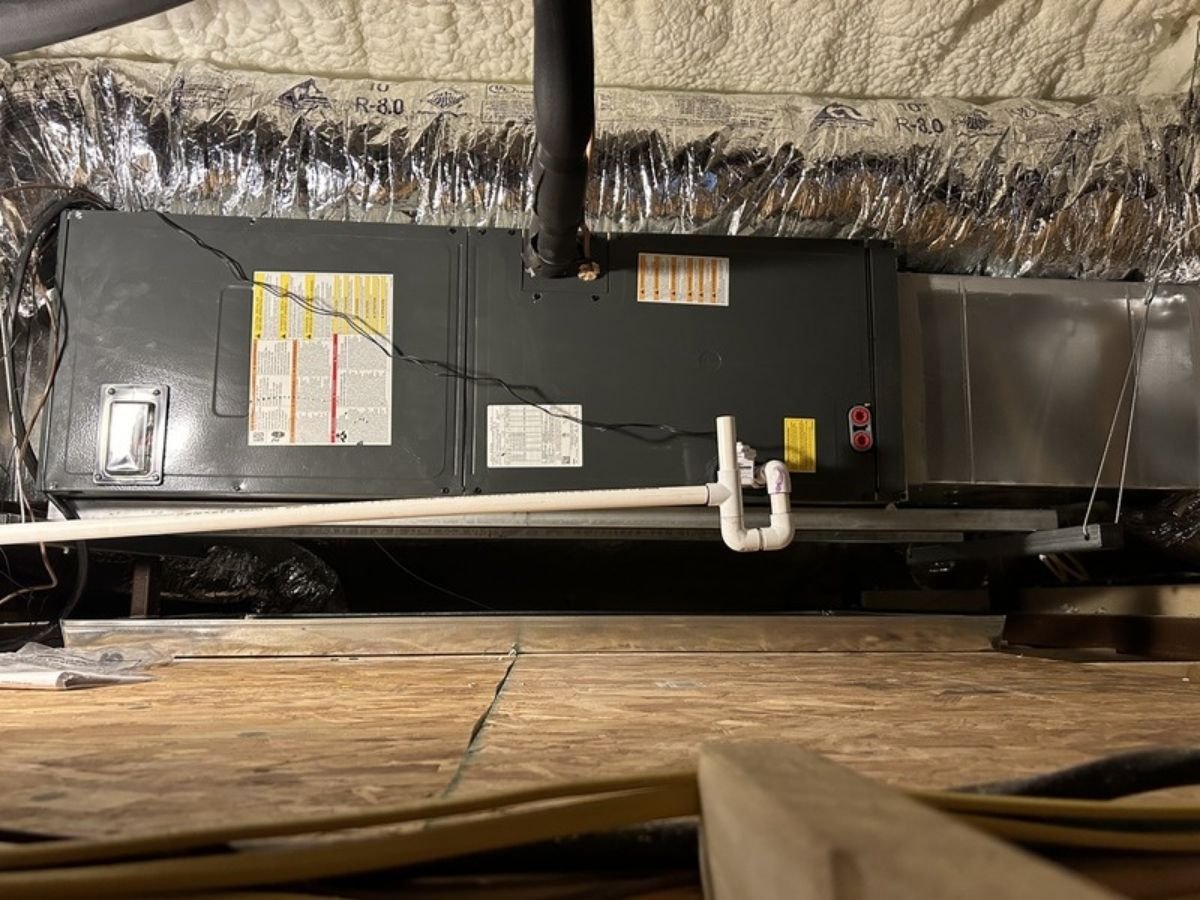
Many homes around Oklahoma City run ductwork through the attic. Crushed, torn or disconnected ducts can lose a large share of heated air before it reaches a room.
15. Get a yearly heating tune-up
A clean, adjusted system burns fuel more completely and catches worn parts before they fail during a cold snap.
When high bills point to a bigger problem
Call a technician if your bills jump sharply even though your habits haven’t changed, some rooms never warm up, your heat pump thermostat often shows AUX or EM heat, or your furnace is more than 15 years old and needs frequent repairs. If you’re weighing a new system, read our comparison of heat pumps vs furnaces in Oklahoma.
Oklahoma Climate Solutions is a family-owned heating and air company based in Moore, licensed as an Oklahoma State Limited HVACR Mechanical Contractor (License #00184844). We offer heating service in Oklahoma City and across the metro, including Edmond and Norman. Call 405-503-9833, Monday through Friday, 8:00 to 5:00.
Frequently asked questions
How can I lower my heating bill in Oklahoma?
Set the thermostat to 68 while you’re awake, use setbacks when you’re away or asleep, change the filter regularly, seal drafts and get a yearly tune-up. The DOE says setbacks alone can save up to 10% a year.
Does closing vents in unused rooms save money?
Usually not. On most central systems it raises pressure in the ducts and can make the system work harder.
Why is my heat pump bill so high in winter?
The most common reason is backup electric heat running more than it should, often after big thermostat setbacks or when the outdoor unit needs service.